Going over the basics of Chaos Solo Engine - Fantasy Basic. Sections for Overview, Getting Started, Premise & Opening Scene, Boons & Banes, Scenes & Events, Extras & Threads, First Scene and Ending & Starting a Scene.
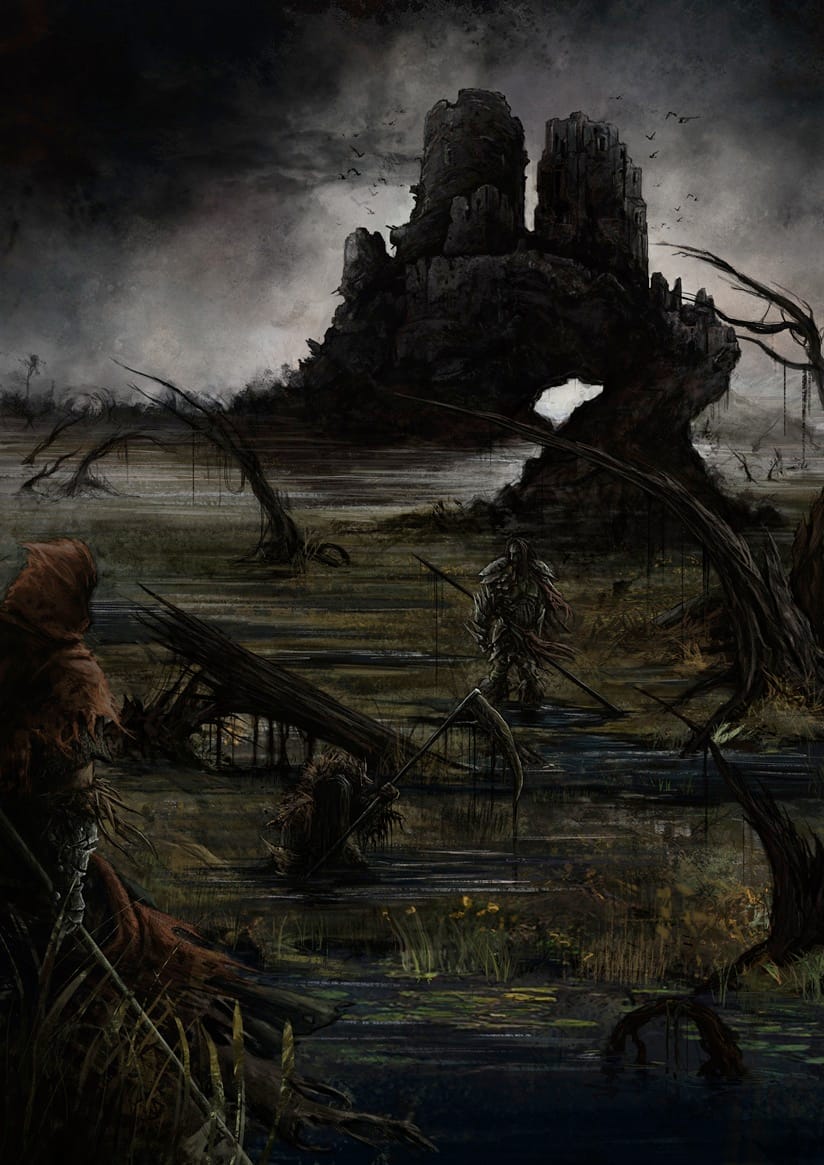
[Image by Jack Holliday]
Chaos Solo Engine - Fantasy Basic Intro
Chaos Solo Engine - Basic Fantasy is a set of tables and tools to answer questions, provide ideas and track things important to your solo roleplaying game. In a solo rpg you take on both the role of player and gamemaster. You might play a traditional rpg (such as D&D) or dedicated solo rpg.
This system started in 2023 as an article on Rand Roll. It owes much to other emulators such as One-Page Solo, Mythic GM Emulator, Plot Unfolding Machine and MUNE.
The tables all use a 20-sided die (d20). One die to roll, lots of entries and easy to hack. Plus easy to use Boons and Banes, like Advantage and Disadvantage from other RPGs.
There is a pdf of these tables and the full solo emulator on Drive Thru RPG as Chaos Solo Engine - Fantasy Basic.


chaos solo engine - overview | yes/no oracle | test scene | events | action & theme | character | desc & focus | npcs & locs | setting | starting
Overview
Chaos Solo Engine aims to act as a companion to the player(s) when playing solo. Answering questions, helping with ideas, structuring scenes, and guiding ongoing play.
It is designed to be lightweight, flexible and give surprises. Chaos Solo Engine can be paired with text prompts, d100 spark tables, story dice and other ways of giving ideas.
The Fantasy Basic version has a few tables to help with ideas and getting started. The Fantasy Complete version has more random tables and options for customisation.
Getting Started
You'll need one or more Characters, and a place to start. If you've got a setting idea that's great. Otherwise you can discover your setting through play or use tables for ideas.
The Starting Tables have d20 tables for Character Concept and Details. Plus Setting Idea and Opening Scenes tables.
Premise and Opening Scene
The Premise is your basic idea and background, and the first Scene you want to start with. It might come from a character you've made, a film, book, or an RPG scenario.
Add 1 or 2 Extras the character knows for your Extras. And think of a question to be answered as your first plot Thread. Then describe the start of the first scene. Optionally ask the Yes/No Oracle "is this how it starts?" or start with an Event in a random Location.
My last read is Child of the Prophecy by Juliet Marillier, about a family protecting the forest by the lake of Sevenwaters. I decide my Premise is a character lost in a forest by a mysterious lake. The first scene is them waking up by the lake with the first thread as "Escape the forest".
Boons and Banes
Boons and Banes are extra dice used in the Yes/No Oracle, Test the Scene and Events.
If the outcome is "likely", add a Boon, if "unlikely", add a Bane. Add more Banes or Boons for positive or negative factors. Each Bane added negates a Boon and vice versa.
If you have any Boons (or Banes), roll an extra d20 for each and take the highest result (lowest for Banes).
Scenes and Events
Scene. A section of your ongoing story. The length of scenes and timing of them is up to you.
Event. An interruption to the current Scene. It represents uncertainty, the outside world, fate or the Game Master.
A ghost emerging from the wall, a friend declaring their love, an ambush by a foe, the discovery of a clue, good news, the sudden death of an Extra, a fire starts.
Extras and Threads
Extras. A list of characters, factions and other entities connected and relevant to your game.
The woman hiring you, villagers of Helst, your rival Lanod, the Red Knights, the Myer twins, Enjant city, the ship 'Sea Badger'. Maybe not unnamed sailors or every hamlet.
Threads. A list of open plot threads, important to the story or your character(s). Try to name Threads in how they related to your Character(s). Something actionable.
"Seek the Fire Orb", "Find out why Mara is angry with me", "Avoid the Red Knights", "Kick the Plumes out of Helst"
Add and remove Extras and Threads from your lists at end of each scene. Or as you play, if that works better.
Opening Scene
When you have your Character(s), Premise and idea for the Opening Scene, then it's time to start playing.
This could be describing the environment, in the action, a conversation or a skill check. Whatever gets things going.
One option is to Test the Scene to give a surprise.
Ending and Starting a Scene
When you feel a scene has run it's course or it's time for a new one, then bring any action to a close of some kind.
It's a good time to review any notes, Character sheets and update Threads & Extras.
Last is to set the next expected Scene. Often this will be the next logical scene or the next one of interest.
Then either start the next Scene, or end the Session. If you end the Session you've got a place to start next time.
When you are ready to continue, you start the next scene with Test the Scene
Solo Tables
There is a pdf of these tables and the full solo emulator on Drive Thru RPG as Chaos Solo Engine - Fantasy Basic.
If you liked these there are Generators at Chaos Gen and a monthly random tools Newsletter. Or find us on the Rand Roll Discord or an instagram of Random Tables.