A ramble on maps in gamebooks and some of the places they've been used...
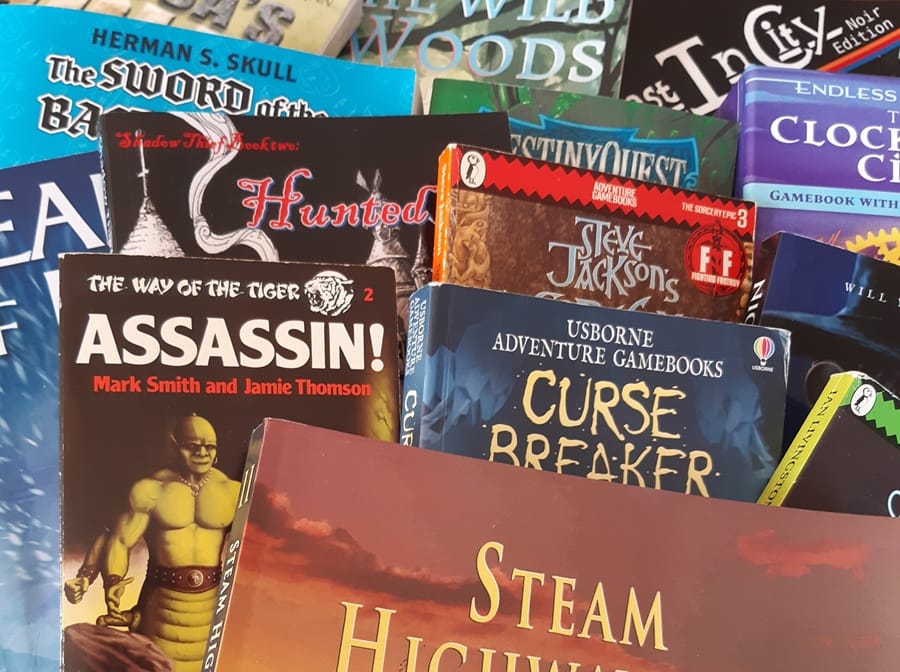
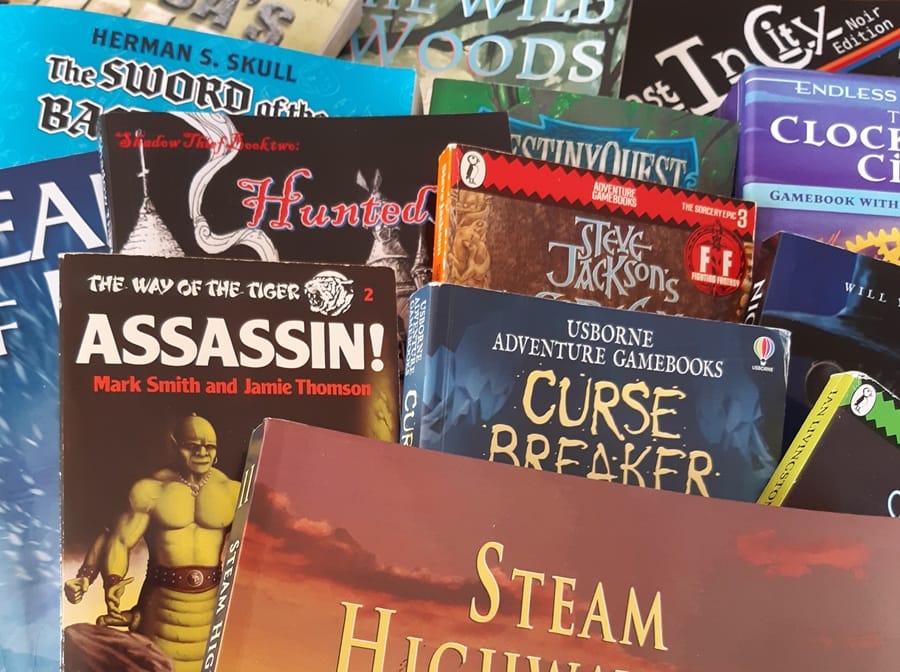
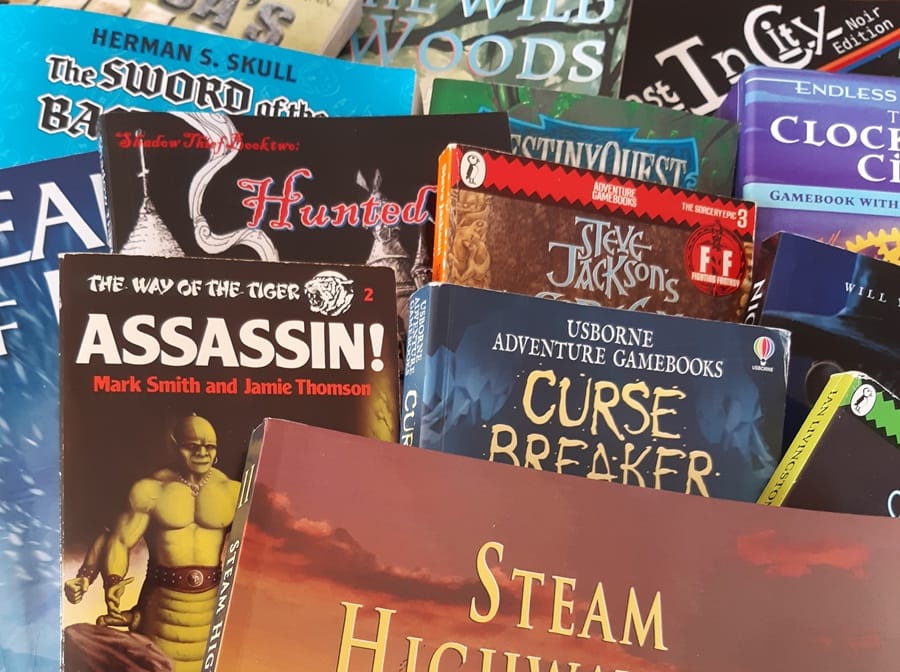
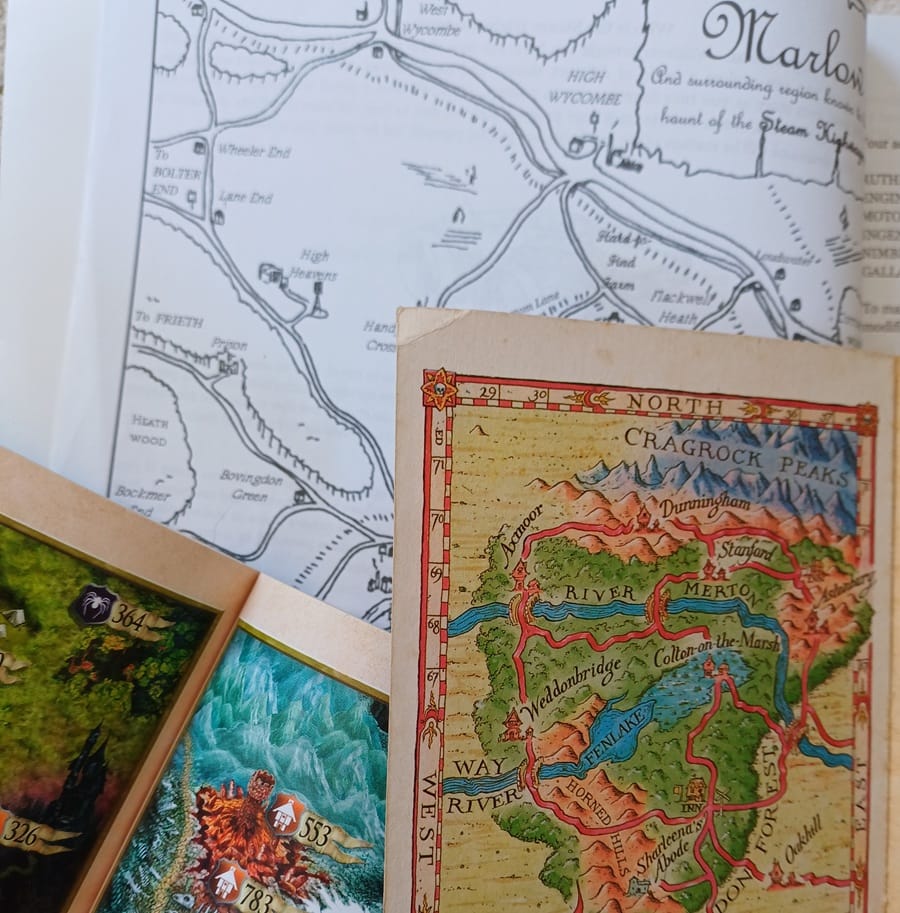
[Cover - Maps of Steam Highwayman, DestinyQuest and Fighting Fantasy]
Maps aren't needed in Gamebooks...
Maps aren't needed in gamebooks, but they add a lot when they're present. Younger me would pore over maps of Allansia, Greece, the four stages of Sorcery and Magnamund while playing gamebooks.
In discovering open-world gamebooks and ones that use maps for directing you to different places, I've come to appreciate their place in enhancing the story.
Importance of Maps
Maps immerse you in the world, give a glimpse of something greater than the scope of the gamebook. A hint of a wider world. Or just the layout of a building...
The sprawling and varied lands of Fighting Fantasy books, the seas of Isle of Destiny, Orb from Way of the Tiger, the empire in Rider of the Black Sun and the places to travel in the Lone Wolf's Magnamund,
As readers of gamebooks, we often create our own maps of a gamebook. Where we've been, where to avoid, the correct pathway through. Or a litany of the dead characters where we've persisted in a tough gamebook, trying to succeed by the "rules as written". Maps of cartographers such as Qatlas (interview) provide guides to others on how to complete or navigate a gamebook.
Maps as Mechanics
Some gamebooks also make maps part of the gaming experience. DestinyQuest by Michael D Ward is a well-known example, where parts of the map are numbered, giving you choices of where to go.
The Clockwork City by Corinna Keefe and Joe Harris does this too, adding new locations for you to visit (and in theory write on) as you explore deeper into the story.
The Storymaster's Tales by (interview) have several maps available for each book. Each location is a different page, so there are different set-ups and variations of each story.
In the Ashes by Pablo Aguilera and the Blood Sword series (Dave Morris & Oliver Johnson) use maps for a different purpose. The combat here uses battlemaps, layouts that have tactical implications. Their use in In the Ashes provide one of the most intricate combat systems for gamebooks.
Open-World Gamebooks
For open-world series maps are of massive importance, as they give clues as to where you can go and how far you can wander. The sprawling maps of Fabled Lands hint at the different realms of future books. While the larger maps of the books and those of the Legendary Kingdoms give you reference as you go from city to plains, ruin to port. I know I used mine regularly when playing these series.
Steam Highwayman (interview) has a different relationship with maps, as you are playing someone who rides around on a steam-motorcycle. You'll need to peruse these as you steam between villages, woods and fancy houses. The maps are of a steam-age England, so many of the names are familiar (moreso if you're from the UK). There's even an add-on of a map case (I believe!) and deluxe versions of the maps.
VulcanVerse has maps of each of the greek-myth realms, but they are fairly vague in their details. Matching with the dreamscape vibes of the books. You may well need to make your own version as you travel these complex stories. Book 5 is an exception to this, with a large map of Vulcan City.
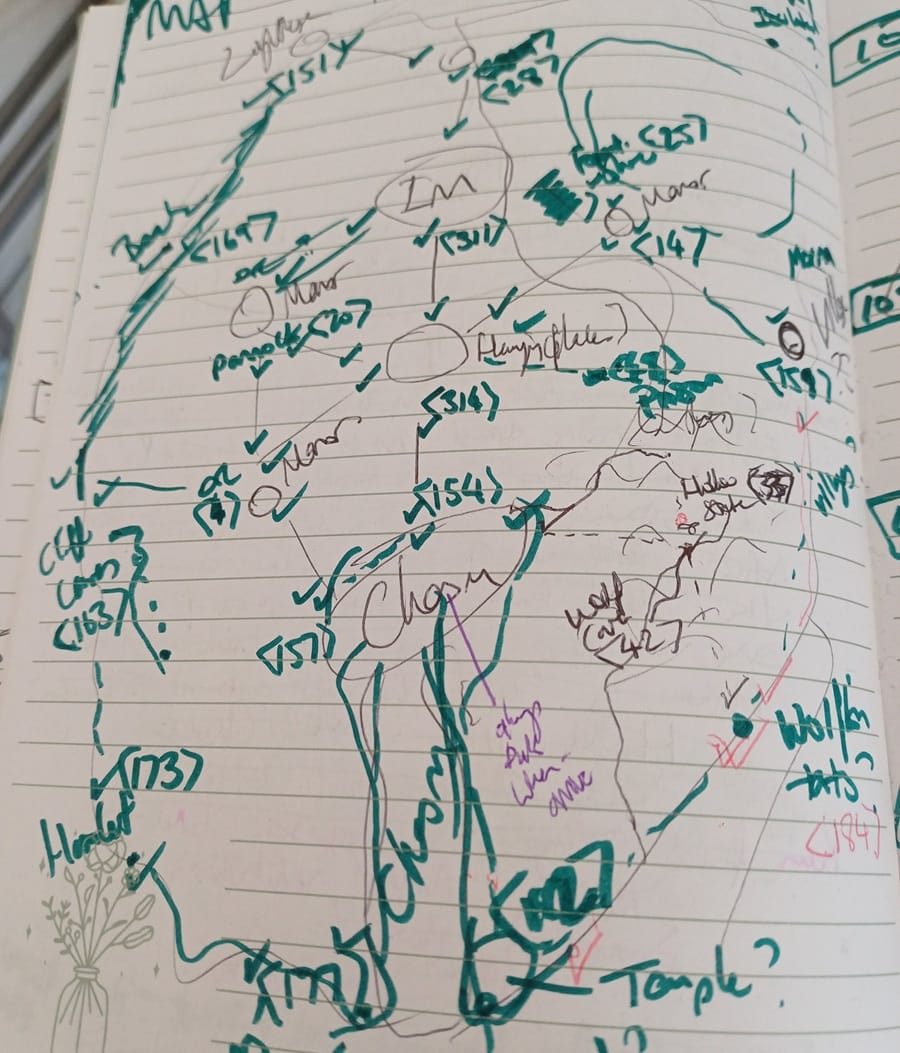
Then I've found when writing and planning my own open-worlder, that a simple map connecting up the locations makes it easier to plot out and grasp this thing I'm creating.
They don't have to be a work of art, as demonstrated with draft 1 of Isle of Sorcery writing below!
Finishing Up
What are your favourite gamebook maps?
If you like gamebooks or what you see here, there is a monthly random tools Newsletter and the 100 Endings Book Club for gamebooks. Or join my Patreon, find us on the Rand Roll Discord or take a look at the Interviews on Rand Roll.