In any gamebook - especially any FF book - not mapping it out leads to an inability to explore efficiently on future runs. Mapping it out keeps you on track and if you hit a dead end you can avoid it next time.
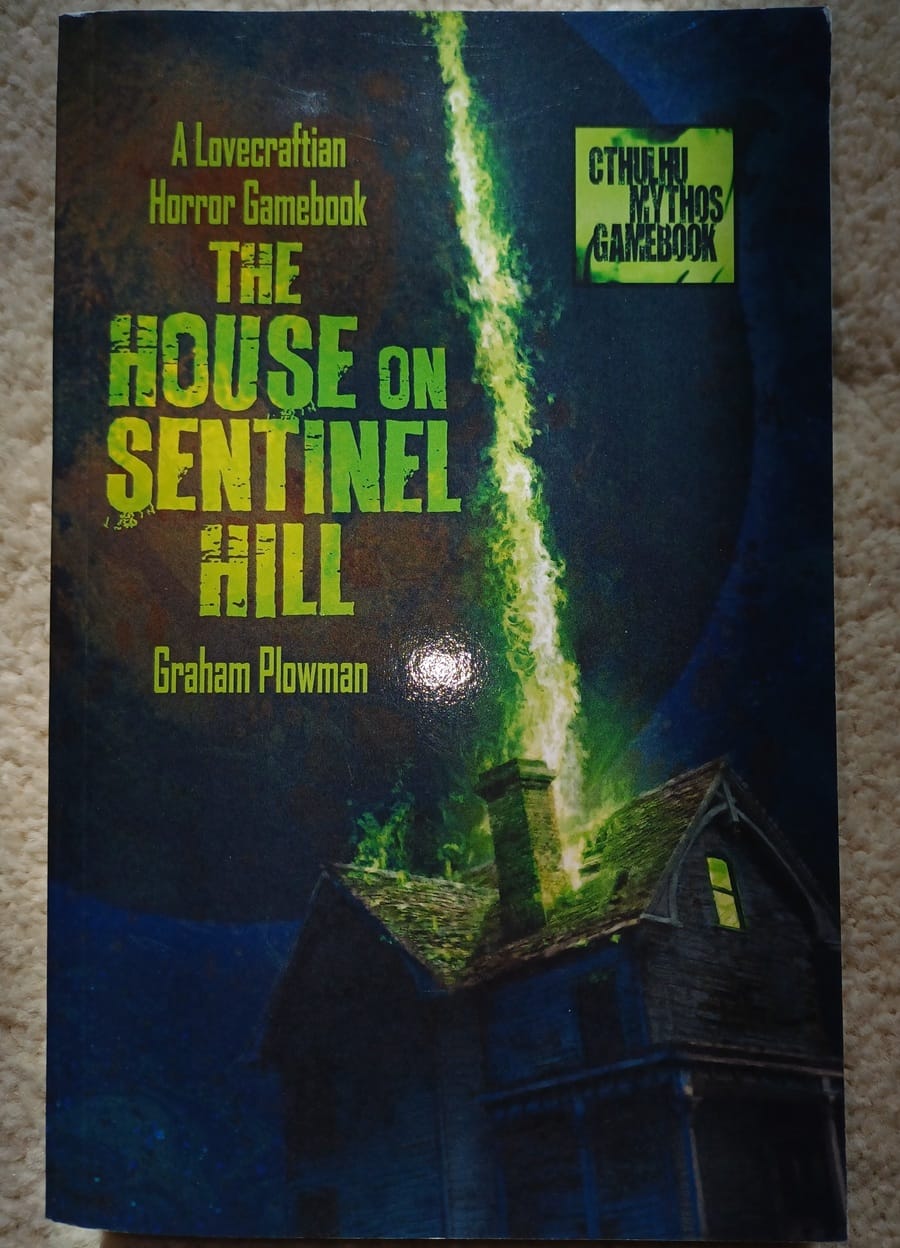
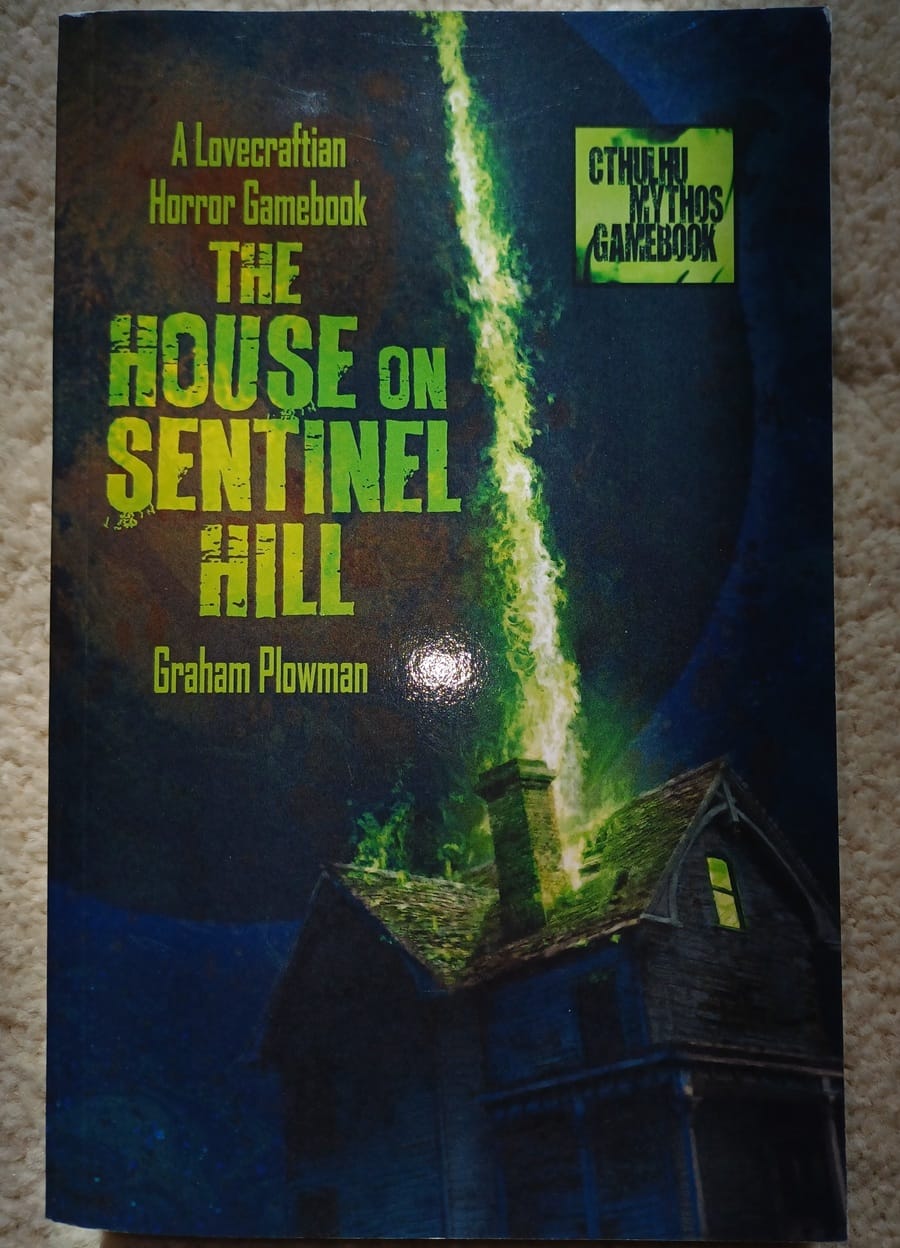
An interview with Graham Plowman, author of gamebook the House on Sentinel Hill. House on Sentinel Hill was the Sept 2026 book for the 100 Endings Book Club. Latest in series of gamebook interviews.
Chat with Graham Plowman
Graham Plowman is the author of House on Sentinel Hill, the Sept 2026 read for the 100 Endings Book Club. Graham is also a composer of Orchestral Horror Music, with more info at grahamplowman.com.
We have the creation of the House on Sentinel Hill, composing horror soundtracks, favourite compositions, and advice for House on Sentinel Hill. Among other questions.
What was your gaming story before the House on Sentinel Hill?
I've always been into RPGs starting in the 80s with Warhammer, M.E.R.P. (Middle-Earth Role-Playing), and Call of Cthulhu.
I also loved gamebooks and had a large collection of Fighting Fantasy books. So it all stems from those beginnings.
It also included a lot of boardgames such as Heroquest, Space Crusade, and various other Games Workshop releases like Talisman.
How did House on Sentinel Hill come about?
House on Sentinel Hill started as a Flash game (remember Flash on the web?) but it was taking too long. I was doing all the art and programming myself.
Flash got abandoned and so I abandoned that approach - but I had the story mostly worked out and it was a story I still wanted to tell.
So after getting back into Fighting Fantasy again when they were being re-released, it seemed like transferring that story to a gamebook was the ideal fit. So I started writing it, plotting out the paths and upgrading the story as I went as new ideas came along.
What was your process for creating the gamebook?
Complicated!
I used an app to track the flow charts and paths and started working through the story as a series of 'hubs'. The town, the house, then beyond. A lot of on-the-fly changes and adjustments go into a gamebook, and a lot of playtesting as well.
So a combination of a hand-drawn map, a digital flow-chart, and a word doc with the actual books content were used.
How did you become a composer of Cthulhu Mythos Music?
I was always into film music, and played piano. From that I wanted to compose music using a virtual orchestra.
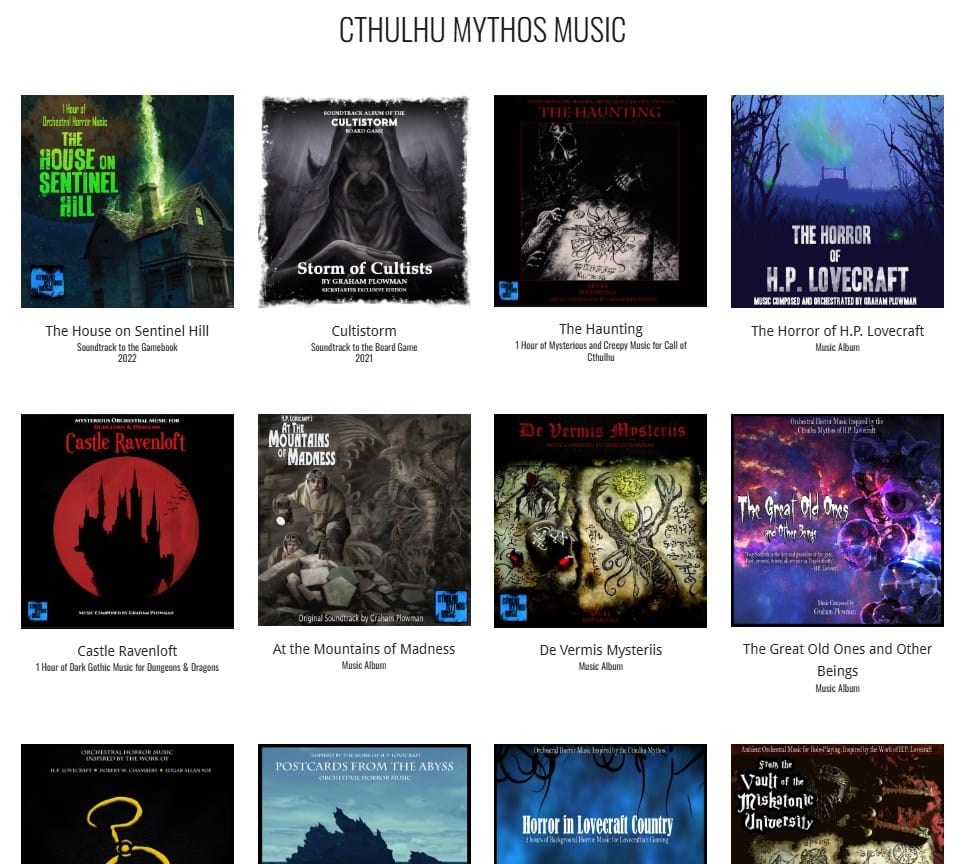
I started with film-like music, fantasy etc, but given my old Lovecraft interest I evolved it into music inspired by Cthulhu Mythos stories and that is how the channel took shape.
I also took inspiration from Howard Shore's Lord of the Rings score which I adore, and that too shaped some of my music, such as my two Dreamlands tracks.
Which are your favourite horror compositions?
Of mine or others?
Of others, I love The Omen/Omen 2 and Alien by Jerry Goldsmith, a variety of Marco Beltrami scores.
Of my own I like the already mentioned Dreamlands tracks, and 'The True History of Earth' track from my Mountains of Madness album.
How did you put together the particular soundtrack for the gamebook?
With a computer, a midi keyboard, and a load of virtual instruments - including a virtual theremin.
I have a pretty established setup and workflow that made the composing process quite efficient, so even hour-long pieces could be done in a couple of days.
What advice would you give someone struggling with House on Sentinel Hill?
Cheat!!!! I made it too hard - that's the Cthulhu Mythos no one survives mentality I have.
(Warning - SPOILERS!)
Actual advice, get the proper portal coordinates from the study. Go immediately right on the alien world, then backtrack left. Trust in the bizarre things that want to talk to you (to a point) and map out the journey.
In any gamebook - especially any FF book - not mapping it out leads to an inability to explore efficiently on future runs. Mapping it out keeps you on track and if you hit a dead end you can avoid it next time.
There's a lot of nuance to THoSH, with multiple situations having pay-off later - leading to multiple ending possibilities. I would say it's not about finding them all - it's simply about finding one of those endings. My wish is that I made it easier to find an ending and have the story wrap up - I think that would have been a good choice.
What are your next big projects that you can talk about?
I'm finally - FINALLY - working on a new gamebook, but I can't say much about it.
I announced a new gamebook idea a couple of years ago soon after I had finished THoSH, and then it was used by someone else... so lesson learned.
Where can people find you online?
I don't like social media overall but I have a website www.grahamplowman.com and the YT channel 'Cthulhu Mythos Music'
Finishing Up
If you haven't tried the House on Sentinel Hill, track down a copy!
There are many more articles on Rand Roll. Plus a Rand Roll Discord and instagram of Random Tables. I also create Generators at Chaos Gen and have a monthly random tools Newsletter.